Note: This week’s recap is a little late because the episode was a lot to digest. As usual, if you haven’t seen you may want to watch first and then read.
The week’s episode of “Being Mary Jane” was, in my opinion, one of the best episodes thus far. Mara Brock Akil took Mary Jane and viewers into the uncharted territory of discussing sex trafficking, coming out to a homophobic parent, and navigating inter/intraracial relationship issues. In each of these issues there was a journey through darkness that either enlightened the character or submerged them even deeper into the void.
The episode starts with Mary Jane continuing a light dalliance with David which turns out to be a nightmare starring a white baby named Andre–a reminder of her past. She is swiftly kicked backed into reality by an infant’s blood-curdling cries and she realizes that her life is actually nightmarish because of her niece’s takeover of her home. But this is minor. One of the major plots is revealed when we see Mary Jane in a car watching a young woman sitting in front of a motel. This is our introduction to Mary Jane’s research for a segment on sex trafficking.  In the car Mary Jane gains insight into the world of sex-trafficking in Atlanta–the sex trafficking capital of the United States. Note: Atlanta is, in fact, a major hub for sex trafficking in the United States. And so art imitates life on this episode as Mary Jane learns about the reality of life for a teenage girl caught in sex trafficking. It is hard to say that there is such thing as a refreshing take on sex trafficking but, if I could say it, Brock Akil gave us that. In my observation, I usually see white people at the forefront of the anti-sex trafficking movement and young black girls as the victims and the stars of the narratives. Brock Akil casts Mary Jane in the role of “person with a Messiah complex” in order to do saving work for a young white girl caught in trafficking. Unfortunately what viewers discover is that Messiah complexes don’t necessarily yield fruit. Mary Jane’s best attempt to rescue a 15-year-old white girl from sex trafficking most likely gets the girl into bigger trouble. Thus, both the girl and Mary Jane were cast deeper into darkness. Following this botched rescue, we see Mary Jane at her desk watching video of another young victim of sex trafficking. The young victim speaks glowingly about her pimp, and Mary Jane stares at her in disbelief. And scene.
Note: For those of you who watched last night, you probably realized that I’m recapping this out-of-order, just stay with me though? I’m going somewhere with this.
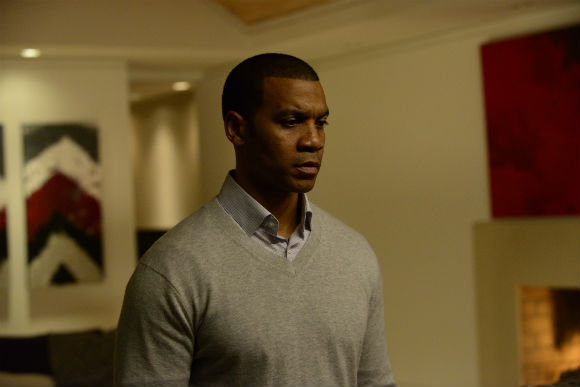 The second issue that took place was coming out to a homophobic parent. Mary Jane’s best friend Mark has hidden his true sexual nature from his parent but it all came to a head last night. During a staged dinner where Mark and Mary Jane play the role of happy couple, Mark’s mother realizes that it is all a show. Frustrated with the farce, Mark’s mother tells him that she knows he is gay and has known for sometime. But it is not his mother’s reaction that is startling, it is Mark’s father. He rises up with such great anger that first situates itself in his son’s preference to stick his penis in another man’s anus but then it becomes more complex. It turns out that Mark’s father is angry because his son preferred to live a lie rather than tell the truth and risk his father’s displeasure. Again Brock Akil takes an issue that has its place in the lived experience of many black men and women and brings it to life. Traditionally the black community is sketched as being homophobic but only recently are we seeing stories bring that to life on primetime television. For instance, Lee Daniels’s “Empire” features record mogul and father Lucious Lyons battling with his feelings of homophobia toward his same-gender loving son–feelings that were once so vitriolic that he threw him in a garbage can. And now we have another father in primetime verbally discarding his same-gender loving son. Mark came out of darkness, in a way, but he didn’t experience much relief as it created tension between him and his father and resulted in the loss of the lover he shrouded in darkness. This brings us to the third issue, navigating inter/intraracial dating.
Our first encounter with navigating interracial dating occurs when Mark and his boyfriend Lance have a fight before his parents arrival. Lance doesn’t understand why Mark kept his sexuality a secret from his family nor does he understand Mark’s difficulty with navigating not only his blackness but his gayness. Again, art imitates life and Brok Akil taps into the nuanced issue of the black gay lived experience. The reality is that some black gay people feel they have two identities to navigate and, sometimes, it is easier–but still challenging–to be just a minority rather than the double minority of being black and gay. I, being a black woman, understand the struggle of being a double minority but I dare not say I understand the struggle of being the double minority of black male and gay. Over the past weekend I did have some thoughts about the privilege that white gay men have because they still have their whiteness to protect them, but that was the limit of my reflection. The black gay man, on the other hand, cannot throw off his blackness and even if he can put off his sexual identity it will not protect him.
Then we have the intraracial dating issue that Kara presents when she tells an otherwise good suitor that she doesn’t date Latino men. Kara was previously married to a white man and that didn’t work out. She dated an intern who was Mexican and that didn’t work out. And now an eligible bachelor is in front of her, who it seems she has chemistry with, but she sabotages it with her “No intraracial dating rule.” We don’t know much about why Kara has that rule, and it actually seems a little illogical given her track record with men across the board, but maybe we’ll dive deeper into that as the season continues.
As you can see this week’s episode was chock full of issues. Issues that needed to see the light in primetime particular in black households. I called this lesson “coming out of darkness” primarily because Mary Jane’s pending segment on sex trafficking reminded me of a series of conversations I’ve had over the past few days/months and my responsibility. I’ve not said it here because this blog is fairly new, but my hope is that the next chapter of my life will be spent researching and studying issues in sex and sexuality and ethics. The “Out of Darkness” tag has particular significance to me because it is the name of an anti-sex trafficking organization here in Atlanta that I trained with a few years ago. I remember, vividly, what it felt like being one of the only black faces in a white space dedicated to saving young women from sex trafficking. I remember what it felt like to watch the videos of young girls in sex trafficking and have most of them look like me and not like some of the lily-white faces I’ve seen plastered on billboards around the city. I remember feeling at odds because at once I wanted to help but I didn’t want to do it under the banner of a group where almost everyone was “other” treating the young women they were saving like the “other.” I didn’t like the rhetoric used to do this saving work. And yet, now that I know about this problem, I am responsible for becoming a part of the solution not just a critic of it. As many times as it and other issues around sex and sexuality come up, I am responsible for becoming a part of the solution.
“Being Mary Jane” reminded me of my responsibility. My hope is that many other people saw this week’s episode and realized their responsibility. Their responsibility to do saving work on behalf of victims in sex trafficking. Their responsibility to welcome their brothers and sisters. Their responsibility to be empathetic to those of a different or same race/ethnicity. Mara Brock Akil brought us out of darkness on Tuesday. We can no longer plead ignorance about some things, so now the ball is in our court. What are we going to do?
A final note: The one critique I will make about Tuesday’s episode is Akil’s neglect in providing people with information about what to do if they suspect a young person is involved in sex trafficking or information about sex trafficking in general, at least not on the show. BET.com did dedicate a page to sex trafficking education, and I also provided some additional links.
Alliance Against Human Trafficking
International Rescue Committee
If you know of any other reputable organizations, please leave them in the comments.


 In her run with Dr. Aron’s experiment, Len Catron points out that the love that manifested between her and her university colleague happened because they chose it not because it happened to them. Indeed that’s a primary difference between her situation and mine because, as I articulated above, love happened to me and my friend and we fell into a relationship. The absence of making explicit choices about the relationship–save for when he chose to breakup with me and when I chose to take a break from a friendship thereafter–is what weakens the argument for the slow and steady love I prefer and that’d I’d suggest to more people than not. I take issue with the masses using Dr. Aron’s experiment as a love accelerator because it could, at worst, result in people objectifying and manipulating one another and, at best–well someone might actually fall in love and create a sustainable relationship but that is yet to be seen (Seriously, have we heard from the original couple in Dr. Aron’s experiment?). Anyways back to this issue of objectification and manipulation of love. I surmise that people might first look for someone who they could love, then ask the questions and stare into their hopeful beloved eyes, and make the experiment do more work than they actually have to do themselves. That is the over-manipulation of love that is unfolding before our eyes. As a single person on the market I’d be afraid that my dates would be made of men asking the 36 questions they found on the internet instead of asking their own questions and taking the time it takes to truly know someone.

 Nicole Symmonds