The Clock That’s Ticking…

Like many women my age there’s a clock ticking in me, but unlike those women my clock is ticking for a different reason. This clock has nothing to do with bearing children before my eggs dry up or before I turn 40 and everything to do with bringing some things to bear before my parents leave this place called earth. Many would think this a bit morbid or macabre but this is my truth and it is my reality.

For as long as I could remember I was always that kid who had older parents. While I knew people who, at 15, had parents who were just hitting their 40s, my parents were 40 when I was born in 1980–you do the math. Once I became a young adult and moved further from home, first to college and then to NY, I became increasingly concerned about the lifespan of my parents. It would hit me the hardest when I made my annual trip home for the holidays and the feeling peaked on my birthday. Every year my parents take me out to dinner for my birthday. We get all dressed up and go out to eat and drink the night away. But over the years that night has started to feel somber for me because I wonder if that year will be the last year I celebrate with my parents. I remember one year on my birthday I actually told my mom about my boding fears to which she tearfully looked me in my eyes and told me that her aunt and mother lived to see their 90s so rest assured she and my dad will be around for at least 20 more years. She assuaged my fears for a while until the next year.

This year my family celebrated the 80th birthday of my father to much fanfare. Yet it was also the same weekend that we laid one of the great matriarchs of the family to rest at the age of 90. While I did my best to remain present at my aunt’s celebration of life and my dad’s birthday–I come from a Jamaican family so it’s not odd for a funeral and several parties to take place on the same weekend, I was haunted by the fact that, according to my mom’s calculations, I may only have my dad for another 10 years. All of this scares me because I am the youngest child in a family full of older people. Sure I have cousins who are my age and some aunts and uncles who are younger than my parents, but I am closest to my parents. They are all I have known in the way of consistent, unconditional love. I have a brother and a sister who are both in their 50s and, in many ways, I feel they will have had a lifetime with my parents that I may not get to have. In 20 years when I am their age, I will not have my parents to call on or go to and that scares me. I am the youngest and I have youngest tendencies. I call my parents fairly regularly, go home for the holidays, and even vacation with my parents on occasion. Last year was the first time I didn’t go home for Christmas because I visited my then boyfriend while he was studying abroad in Germany and that was a hard decision to make. As much as I wanted to spend the holidays with him, I thought frequently about what kind of holiday my parents would have. Without me coming home the house would be quiet, no elaborate meals would be cooked, and no Christmas tree would be put up. I worried a lot about missing Christmas with them. It felt so bad that on Christmas Day, when I did talk to my parents while my boyfriend and I were having dinner at a restaurant in Paris, I felt the pang of melancholy for being away from them.

And now here I am at 33, months away from being 34, single with no romantic prospects which also means that children aren’t in the immediate future. But my womb is not what pangs me right now, that biological clock is not ringing in my ears, it is my parents’s clock that is ever ringing for me. Many may consider me obsessed with death, I’m not. I’m more obsessed with my parents being alive to see me accomplish some things that I’m afraid are far off for me. Major life events and milestones such as getting a PhD, owning a home, getting married, having children. Truth be told I’m more interested in my parents seeing the latter three because those are different accomplishments than I’ve made thus far. My parents have seen me graduate from high school, college, and a master’s degree program; they’ve known about my professional success; they’ve heard about my world travels; but they’ve not known me to have the security of a home I owned, the long-term love of a significant other, or the pitter patter of little feet be they a baby’s or a puppy’s. That’s what I want my parents to see while they are still here. And, to be honest, referring back to them being all I have known in the way of consistent, unconditional love, my fear is being left alone and without that consistency.

Shortly before I wrote this post I watched a video of a Nigerian couple’s wedding reception and though the video’s focal point was of their well choreographed bridal party, somehow I looked straight through them to the table of elders behind them. Looking at the table of elders smile upon the newly married couple, I remembered how much I want my parents to see my day. I want my parents to smile upon me and my husband, to dance and laugh the night away with us, to wish us well with words of wisdom from their nearly 50 years of marriage, to be there for the birth of our first child, etc, etc. These are the things that are really important to me as I look at what’s next in my life. I want my parents to see this as much as I want it for myself because it provides the assurance that their baby is taken care of and loved by one singular person. This is not to discount the number of loving family and friends that I have, but I know there is a type of assurance and relief that a parent experiences when their child gets married–son or daughter.

I remember sharing this truth with a friend who affirmed that there are few greater feelings than giving your parents the gift of marriage because it symbolically communicates that the child they loved and cared for is now being loved and cared for. She would then explain to me how devastating it was when she got a divorce because that symbol of love and care was gone and now her parents have to worry again. I was present at that friend’s home dedication ceremony and I clearly remember the look on her father’s face as she spoke about her new home and the journey it took her to get there. He was glowing with pride and when he embraced her it was with a sense of relief, as if to communicate, “My daughter is finally at home.” I teared up thinking about my own father embracing me with pride in that way.

I’m aware of the type of responses this could garner, ranging from “don’t obsess over when they’ll go, live in the present with them now” to “all of those things will come in due time.” I do live in the present with my parents, I appreciate everyday that they are still here–and I’m thankful that for their age they are in extremely good health, and believe that one day all of those things will come–most of the time. But every now and then I must face my fears and today I decided to write them down in hopes that it will be cathartic and allow me, if only for a moment, to let go of my fears, lay down my burdens, and just live.
When Sexual Violence Goes Viral There Are Many Perpetrators

16-Year-Olds Rape Goes Viral On Social Media: No Human Being Deserved This | ThinkProgress

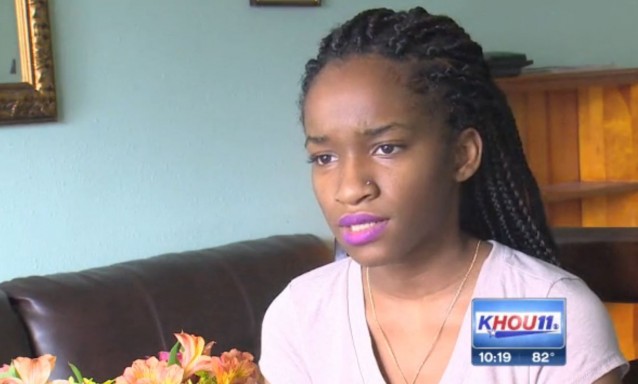
This is Jada, a young woman who was drugged and raped at a party thrown by fellow high schoolers. She wasn’t aware of her rape until she saw pictures of her unconscious body circulating on social media. Once Jada realized what happened she decided to release her identity and publicly speak out about the incident in hopes that the perpetrators are caught and punished.

I believe that there isn’t just one perpetrator in this case but there are as many as have sent her image around. Indeed the first perpetrator is the man or men who sexually assaulted her but the second perpetrator(s) are the people who shared her image or likeness, they share in the crime of sexual assault/violation as well. This ought to be a new way of thinking given the proliferation of viral images and videos of women being sexually assaulted, people being physically assaulted, and all manner of intimate and personal violence that has become just another source of entertainment. Therefore, my hope is not just that the young man or men who assaulted her are caught but that every person who forwarded pictures of her vulnerable body are caught and have to deal with the consequences of their indirect involvement in a sexual assault.

In the age of mindless sharing of viral videos we need to be more mindful and we need to be in the business of exacting some measure of consequence for sharing things that directly harm and put the lives of others in danger. If this all seems too ideal then we need to ask ourselves one simple question before sharing images or videos of a sensitive nature–I am specifically speaking about situation such as this, the Steubenville rape case and videos such as those shown on sites such as WorldstarHipHop, “Will this do harm or good to the involved parties?” This question is of particular importance when the involved parties are minors. We must be concerned about how we protect our young and, arguably, most vulnerable population.

I commend Jada for her bravery in publicly speaking up and hope that some measure of justice will be served. I also hope that her actions will encourage many others like her to speak up and out against perpetrators. Lastly, Jada’s actions have actually turned the hashtag meant to shame her into redemption. The real #jadapose represents the courage and strength of a young woman who will, undoubtedly, encourage many to be victors instead of just victims in the fight against sexual assault and violence and for that #istandwithjada


Why I’m Not That Into the 4th of July

Today I have no “Happy 4th of July/Independence Day” in me. For the past few days I’ve felt I have no lot in this day and I’m not the least bit compelled to sing “I’m proud to be an American,” because I’m not sure that I am. I was raised in a Jamaican family that wasn’t the least bit interested in waving an American flag, so I feel more Caribbean than I do American. Aside from that, as I reflect on this day, I see no merit in it from both a historical and current perspective.

The signing of the Declaration of Independence changed nothing of the Negro’s status–I’m channeling a little Frederick Douglass here. It secured the independence of white men and women by way of allowing them to live and move in an independent nation but black people were still enslaved. It would take nearly a century for black persons to taste freedom and even then that freedom was limited and subpar. The self-evident truth of equality and the unalienable right to life, liberty, and the pursuit of happiness didn’t apply to people of color, and, as a friend pointed out, still doesn’t. We may be equal–and that’s arguable–but we lack the equity necessary to secure success for the greater community. We still suffer from disparities in access to employment, education, economic resources and daily struggle for independence in a society that runs on the power of the patriarchy and privilege–white or otherwise. I see nothing to celebrate. As I’ve said on numerous occasion, “If one is not free, none are free.”

I’m not the most militant person but on this day I feel this way because I don’t think there is a reason for me to wave any flag aside from a Jamaican one or Somalian, Eritrean, Ethiopian one–I’ll explain the latter three in another post. This will probably be the way I feel for an indefinite amount of time until I believe AND see equity–not equality–and the true extension of the unalienable right of life, liberty, and the pursuit of happiness to all people.

Frederick Douglass’s speech “What to the Slave is the 4th of July?” captures precisely why I have no spirit for this day. His words are not just about history but our current moment in time. They are full of the frustration I and many like me feel, but he also has hope for the future. A hope not yet realized but hope required nonetheless. Below is an excerpt from his speech that resonated with me:


Fellow-citizens, pardon me, allow me to ask, why am I called upon to speak here to-day? What have I, or those I represent, to do with your national independence? Are the great principles of political freedom and of natural justice, embodied in that Declaration of Independence, extended to us? and am I, therefore, called upon to bring our humble offering to the national altar, and to confess the benefits and express devout gratitude for the blessings resulting from your independence to us?

Would to God, both for your sakes and ours, that an affirmative answer could be truthfully returned to these questions! Then would my task be light, and my burden easy and delightful. For who is there so cold, that a nation’s sympathy could not warm him? Who so obdurate and dead to the claims of gratitude, that would not thankfully acknowledge such priceless benefits? Who so stolid and selfish, that would not give his voice to swell the hallelujahs of a nation’s jubilee, when the chains of servitude had been torn from his limbs? I am not that man. In a case like that, the dumb might eloquently speak, and the “lame man leap as an hart.”

But, such is not the state of the case. I say it with a sad sense of the disparity between us. I am not included within the pale of this glorious anniversary! Your high independence only reveals the immeasurable distance between us. The blessings in which you, this day, rejoice, are not enjoyed in common. — The rich inheritance of justice, liberty, prosperity and independence, bequeathed by your fathers, is shared by you, not by me. The sunlight that brought life and healing to you, has brought stripes and death to me. This Fourth [of] July is yours, not mine. You may rejoice, I must mourn. To drag a man in fetters into the grand illuminated temple of liberty, and call upon him to join you in joyous anthems, were inhuman mockery and sacrilegious irony. Do you mean, citizens, to mock me, by asking me to speak to-day? If so, there is a parallel to your conduct. And let me warn you that it is dangerous to copy the example of a nation whose crimes, lowering up to heaven, were thrown down by the breath of the Almighty, burying that nation in irrecoverable ruin! I can to-day take up the plaintive lament of a peeled and woe-smitten people!

On Basic Needs: A Brooklyn-Based Reflection

This past Friday evening I was walking with a friend in Brooklyn and our walk took us deep into a Hasidic Jewish community in Williamsburg. It was about 10PM and the Jewish men were taking their post- Shabbat dinner walk around the neighborhood. The men walked in pairs and triplets talking amongst themselves and paying no attention to the two black women walking in their midst. My friend and I observed them, the occasional women and children, and the general peacefulness of the neighborhood. There were no cars whizzing by, no police officers on the street, and of all of the closed stores and shops we saw within a 15+ block stretch they were filled with necessities. It was a community seemingly focused on basic needs and each other.

Before long we crossed over a block and landed in the Bedford Stuyvesant area of Brooklyn, a predominantly black area that was once known as the largest ghetto in the US. No more peace, parked cars, closed stores, and simply clothed families. Instead we were met my police, whizzing car and sirens, extraneous stores, complicated clothing, the works. It was like day and night and the startling contrast hit me and my friend like a ton of bricks. We began to talk about the differences between the community we exited and the one we entered, not to generalize it or set up a binary, but to grasp the profundity of the shift we experienced in the span of a few blocks. My friend pointed out that nothing was sold in that Jewish community that wasn’t needed, I noticed that too. There were no random clothing stores, no junk and processed-food laden bodegas, nothing in that neighborhood that wasn’t of necessity to the people. Capitalism wasn’t king in that swatch of Williamsburg, community and G-d were. It’s a self-sustaining community that usually doesn’t permit the interference of external businesses. It is a community that thrives on basic needs. This got me thinking about the work a friend of mine is currently doing to raise the basic need averages of 1 billion people–a lofty but a worthy goal to strive toward. When he or anyone else talks about wanting to raise the basic need averages of people in under-served communities do the people even understand what basic needs are? This is a serious question.

When a community is flush with extraneous businesses pushing wants as needs are the people truly aware of what the needs are? Or are they thinking that basic needs are actually the extraneous? This question is driven by the move of capitalism that exists even in the poorest of communities. Consumer goods are sold to people in these communities under the guise of need when in reality they are wants or a subpar quality of needs at best. Given the proliferation of this system, people in the community build up an appetite for consumption based on everything they don’t need. Thus my concern is that when we talk about increasing basic need averages we have to gain understanding of what inhabitants of under-served communities believe those basic needs are through on-the-ground observations and direct engagement with inhabitants of said communities. Then we must educate them about what basic needs are and how & what they should be fighting for not only for themselves but for future generations.

I don’t say any of this to imply that black communities need to be more like Jewish communities–although I do think they can learn some things about their structure. I say this because I believe there is a disparity that exists in knowledge of what basic needs are that is endemic to under-served communities such as those inhabited by black people. This is all based on observation of not only the communities I walked through on Friday night but communities I’ve seen over the years. And the bit of community development knowledge I have tells me that working toward the increase of basic needs averages is important but so is education that increases communal awareness about what those basic needs are in the first place.

Nevertheless, I am willing to be corrected on this matter and certainly would love to discuss this further with interested parties.