When Sexual Violence Goes Viral There Are Many Perpetrators

16-Year-Olds Rape Goes Viral On Social Media: No Human Being Deserved This | ThinkProgress

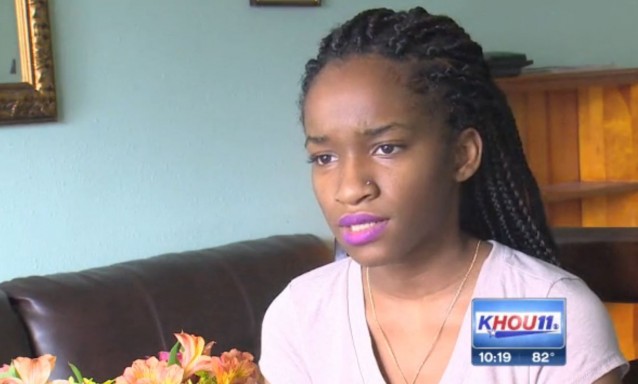
This is Jada, a young woman who was drugged and raped at a party thrown by fellow high schoolers. She wasn’t aware of her rape until she saw pictures of her unconscious body circulating on social media. Once Jada realized what happened she decided to release her identity and publicly speak out about the incident in hopes that the perpetrators are caught and punished.

I believe that there isn’t just one perpetrator in this case but there are as many as have sent her image around. Indeed the first perpetrator is the man or men who sexually assaulted her but the second perpetrator(s) are the people who shared her image or likeness, they share in the crime of sexual assault/violation as well. This ought to be a new way of thinking given the proliferation of viral images and videos of women being sexually assaulted, people being physically assaulted, and all manner of intimate and personal violence that has become just another source of entertainment. Therefore, my hope is not just that the young man or men who assaulted her are caught but that every person who forwarded pictures of her vulnerable body are caught and have to deal with the consequences of their indirect involvement in a sexual assault.

In the age of mindless sharing of viral videos we need to be more mindful and we need to be in the business of exacting some measure of consequence for sharing things that directly harm and put the lives of others in danger. If this all seems too ideal then we need to ask ourselves one simple question before sharing images or videos of a sensitive nature–I am specifically speaking about situation such as this, the Steubenville rape case and videos such as those shown on sites such as WorldstarHipHop, “Will this do harm or good to the involved parties?” This question is of particular importance when the involved parties are minors. We must be concerned about how we protect our young and, arguably, most vulnerable population.

I commend Jada for her bravery in publicly speaking up and hope that some measure of justice will be served. I also hope that her actions will encourage many others like her to speak up and out against perpetrators. Lastly, Jada’s actions have actually turned the hashtag meant to shame her into redemption. The real #jadapose represents the courage and strength of a young woman who will, undoubtedly, encourage many to be victors instead of just victims in the fight against sexual assault and violence and for that #istandwithjada


I Almost Lost Focus

I haven’t written in a while for a variety of reasons. I’ve not been sure about how I want to write about sex and sexuality on this blog in the midst of a world that tirelessly talks about sex. I have many drafts from things I’ve written in response to current events such as the Duke Porn Star and the book that incensed a nation of parents, “It’s Perfectly Normal.” I didn’t publish those stories because I felt they were just reactive and I didn’t want to be a part of the multitude of voices that always have something to say with very little qualification or credibility for saying it. So I’ve tried to find my way and think through what is expedient in regards to talking about sex here and beyond and I’m finally getting to the point where I think I’m ready to come back. But this return was almost not.

A few weeks ago I was interviewing for a job I really wanted and all was well until they told me that I wouldn’t be able to speak or write about sexuality or sexual ethics because it would be a conflict of interest with the organization’s work. I was shocked. Even though I don’t write about sexuality all day, everyday–as you can very well tell from the skeletal nature of this blog–I still believe that work in the field is essential to my life’s calling. The CEO of the organization even pointed out that it seems I get a lot of energy out of talking about and thinking through matters of sexuality. But I also wanted the job because I saw it as a really great opportunity to broaden my professional experience in another area. So I told the team that I could deal with not writing or speaking about sexuality in exchange for a larger goal. I even cracked a little joke by saying, “I can still read books about it, can’t I?” They laughed and we continued with the interview, yet the thought of letting go of the opportunity to write and speak about something important to me weighed heavily on me. When I was done with the interview I called a trusted friend and told her about it and she agreed with the answer that I gave them and talked me through my concerns. It seemed more than logical to take a break from writing and speaking about sex in order to get in on the ground level of some really great and important work within its own right. But I was still discouraged about the possibility that lingered. I know I have a long-term commitment to studying, writing, speaking, teaching, reflecting, on matters of sex and sexuality and I know that’s important to me. I didn’t know for sure, however, if I should jettison that for something that I am much less certain about. Sure I was excited about the organization’s work, the possibilities within the position, and even my brilliantly bright future colleagues, but would that be selling myself short? Long story short, I didn’t get the job.

The official reason for not getting it wasn’t even about all the energy I get from talking about sex or my feeble attempt at proving I’d be fine without writing/writing about–at least as they tell it. It was about the organization needing to reassess their staffing needs. I can’t help but think it was also about God trying to keep me on track. I don’t speak in these terms often because I don’t like to presume what God is or isn’t doing in my life, but I am hoping that this is one of those times where God was doing something particular. The last few months have been bleak for me and I haven’t always been certain about where I’m going, so it meant something that someone took an interest in me and felt my experience impressive. I felt like I mattered again. I needed this opportunity in more ways than one. I couldn’t wait to move and start a new life and I was even delaying plans I’ve been talking about for a while. But just like that the plans changed and it seemed like I was being told to stay the course. And so here I am. No regrets. 

Earlier this week I had a chance to speak with a group of people living with HIV/AIDS about faith and sexuality and it was the most vibrant discussion I’ve had. I did the same talk at a church as few months ago and I felt like I was pulling teeth with the congregants, but this week’s group had so much energy around the topic. Interesting because they are a group of people whom some in a church context would say are “marked” because of their deleterious sexual behavior. Yet those people were the most faithful I’ve encountered and the most fearless as well. They didn’t feel entitled to anything. They had no bourgeois Christian laurels to rest on. They just have this lived experience and the certainty that God is still with them. If it wasn’t for not getting that job I wouldn’t have been able to have that experience with the group and to remember what is most important not only to me but to others. So here I go, once more unto the breach, dear friends, once more. I don’t know where any of this will lead me but I am glad to not have given up so easily.


The Southern Baptist Sex Summit and Me: It’s Bone Picking Time

A few days ago news broke that leaders in the Southern Baptist church will hold a Sex Summit in Nashville, Tennessee where they will talk about pornography, teen sex, homosexuality and how pastors can talk to their congregations about human sexuality in an over-sexed world. This was intriguing to me for reasons not limited to my academic interest in studying Christian sexual ethics but because of my own experience in the Southern Baptist church.

A little known fact about me is that I spent a fair amount of my teenage years in a Southern Baptist Church. My mom and I were members of a large Southern Baptist church where we were one of a handful of black families in attendance Sunday after Sunday. We both went to Sunday school and I was quasi active in the youth ministry. This was the first church I became a member of and I was baptized in this church. One more significant thing happened in that large Southern Baptist church, it was the church where I pledged to not have sex until marriage. Through the “True Love Waits” campaign I made a pledge in front of my mother and a room filled largely with white people, to abstain from sex until marriage and keep myself pure. My pledge was sealed with a chintzy gold-coated metal ring. Armed with “The marriage bed is undefiled,” I was held responsible for keeping my sexual desires in check without an adequate discussion about what those desires would feel like and how I can embrace them without burning in hell. I knew how to say “No” before I knew what I was saying no to. There was a large gap in my understanding of sexuality that the very institution that initiated the pledge wasn’t trying to fill and little did I know how problematic that would be. Before long I broke that ring along with my pledge.

There are many like me who, in their high school years took a pledge to abstain from sex before marriage and, for one reason or another, they broke it. In fact, a study done in 2003 showed that 6 out of 10 people who took the TLW pledge in college ended up breaking it and of the 40% who said they were abstaining from intercourse 55% of them admitted to having oral sex. But few people have gotten to the root of why young people are breaking this pledge. I believe that part of the reason that many young people broke their pledge to abstinence is because of the incomplete education they received regarding sexuality in the church.  In my experience the church specializes in shallow teachings on sexuality that do nothing more than tell people to beat their flesh into subjection without really allowing them to think through and discover what this flesh is all about. People are taught that the flesh is a hard thing to control instead of being taught that it is something we have control of and we ought not be scared of it. We can master it in a way that isn’t guided by fear-mongering that implies it will devour us every time we have a warm, tingly feeling. So many topics are tip-toed around and treated as taboo when the reality is, many pastors would be surprised about what their young people know about sex. Hell, many young people would be shocked to know what some of these pastors are doing behind closed doors and it has nothing to do with the marriage bed, but that’s for another day and post. I believe it is time for the church to stop demonizing the flesh in regards to sexuality, to stop throwing around the same tired scriptural references that are never interpreted correctly, so that we may arrive at a healthy, holistic understanding of who we are in Christ, faithful and sexual creatures. I say all of this as someone who still has a commitment to the church. I’ve not abandoned it and have no intentions of abandoning it ever, hopefully. And so my goal is to take up the work of helping the church have these hard conversation about sexuality and desire in the sanctuary. And this, finally, has everything to do with why I want to attend the Sex Summit.

More than 15 years ago the Southern Baptist church gave me a sexual ethic before I knew what a sexual ethic was and it nearly ruined me. Because it was planted in me during a stage in my moral development when I was amenable to conformity out of fear of consequences, it took root in me and those roots are strong. I have spent years pulling up those roots and trying to discover what is the appropriate sexual ethic for Christians or how and when should an ethic be established. I’m generally curious about how many denominations go about teaching sexual ethics to their youth and young adult, but with the Southern Baptist Sex Summit I feel like I can get in on the ground floor and see what exactly it is that pastors are teaching each other in regards to sex. The Southern Baptist Church’s position on sexuality states “We affirm God’s plan for marriage and sexual intimacy–one man, one woman, for life. Homosexuality is not a “valid alternative lifestyle.” The Bible condemns it as sin. The same redemption available to all sinners is available to homosexuals. They too may become new creations in Christ.” Oh to pick apart this statement, like, “If homosexuality isn’t a valid alternative lifestyle, what is a valid alternative lifestyle?” “And why are they still using the term “homosexual” or “”homosexuality” as if they are still in 1952–the moment in time when the American Psychological Association categorized it as a sociopathic personality disturbance in the Diagnostic and Statistical Manual of Mental Disorders(DSM). By 1974 it was categorized as a sexual orientation disturbance.” To use these terms is to treat the LGBT community with clinical gloves, as pure disorders without the possibility that there is some order. I say this as someone who, as of three years ago, JUST removed the term from my own vocabulary after writing it in a paper and having a professor correct me. He told me that “homosexual” is a clinical term that has negative connotations and I should use “LGBT” in future reference. This was in a school of theology, granted not a Southern Baptist school, but a school concerned with educating future faith leaders and scholars of the world. A school interested in how we care for God’s people and that is a universal concern not limited to denominational doctrine. Southern Baptists are not excluded in learning how to speak of God’s children, all of them. So I want to know how they will unpack their statement on sexuality and if any of it will be reworked for language and for logic.

Screen Shot 2014-01-29 at 6.53.26 PM

I’m curious, having looked at the Sex Summit speakers, how a group comprised largely of white men and one black man–and one black woman who will only participate it brief reflection session–are going to talk about sexuality from sexual behavior to sexual preference. How will such a racial and gender imbalanced group handle the vast field of sexuality and dare to teach other leaders how they should be teaching it. I will be honest in saying that I feel some kind of way about the multitude of men who will be in that space, the ones teaching and the ones being taught because the Southern Baptist church “recognizes the biblical restriction concerning the office of pastor, saying: “While both men and women are gifted for service in the church, the office of pastor is limited to men as qualified by Scripture.” So if I am understanding correctly, a bunch of men–mostly white–are going to teach a bunch of other men–probably also mostly white–about what they should be teaching in their churches about sexuality. And these churches will probably be comprised of more women than man, people of color, impressionable teenagers, etc. This should be really interesting…

I’ve said a lot but I’d love to hear from my readers who have experience in the Southern Baptist church, especially those who took a True Love Waits pledge. How did that work out for you? Did you keep the pledge/are you still keeping it? How long? If you broke it, how long until you broke it and why? If you were attending a conference such as this or could send in questions, what would you ask? Let’s talk about it.

Disabling Dominant Perspectives on Sexuality and Disability: A Reflection

For the past few days I have been in San Francisco at a Summer Institute on Sexuality held by San Francisco State University’s Center for Research and Education on Gender and Sexuality. I am attending this Summer Institute to jumpstart my research on sexuality and engage with the practitioners in the field. It has been both an amazing and terrifying experience. Studying sexuality–at least studying topics in sexuality in courses such as Feminist and Womanist Theology–within the boundaries of a theological community seems different from studying it within a broader context. I’ve learned about BDSM (Bondage, Discipline, Sadism, Masochism) as possible healing practice for people with early trauma; the differentiation between gay males and MSMs (Males Having Sex with Males which doesn’t necessarily mean they self-identify as gay) and the startling statistics about sexually transmitted infections in the MSM community; micro-aggressions against people who are transgendered; and surrogate therapy (a surrogate therapist works with a therapist and the therapist client to help the client navigate sexual issues through direct contact–you can figure this one out) as a bridge to healthy sexual experiences within and without relationships. These are just some of the topics we’ve covered in my time here, topics that I have held at a distance because I have never participated in them nor do I know anyone else who has. But yesterday something/someone cut across the distance. Tuesday’s experience was actually a continuation of a discussion on Monday about disability and sexuality and reconsidering our perceptions of the sexual nature of people with disabilities. Our time on Monday morning shed light on the fact that some people assume–consciously and subconsciously–that persons with disabilities are asexual. The assumption is that such persons are so involved in their disability that they have no sexual feeling or that their disability renders them incapable of having sexual desire or feeling. But this began to change when we watched a video entitled Sex-Abled: Disability Uncensored. In this video, people with various levels of disability discussed and joked about their sexual desires as something that exists just like it does for people with no perceived disability. This was my first time seeing something like this and I was blown.

Maria Palacios, Sins Invalid

Maria Palacios, Sins Invalid

On Tuesday we continued this discussion with Sins Invalid, a performance project that “incubates and celebrates artists with disabilities, centralizing artists of color and queer and gender-variant artists as communities who have been historically marginalized.” Two of the members of Sins Invalid, Patty Berne and Leroy Franklin Moore Jr., spoke to our group about the mission and work of the organization in general and disability justice and the power of sex in particular. At the beginning of class they handed out a pamphlet and a postcard-size Sins Invalid flyer featuring a young black man in a wheelchair being embraced by a black woman. I thought nothing of this image. Then the lights dimmed. Patty and Leroy presented clips of past Sins Invalid performances which ranged from Matt Fraser, a young man with phocomelia/short arms doing interpretive dance to the patronizing and patently offensive words of persons without perceived disabilities to Maria Palasios, polio survivor, feminist writer, poet, and disability activist who boasts a healthy sexual appetite and wants others to know, “Disabled People Are Sexy.” I was at a distance watching all of these people while slowly having my preconceived notions shattered and then he came on the screen. First I recognized the voice, the DynaVox, an electronic communication device for people with disabilities that affect their vocal ability. Then I recognized the face, a young black man with the defined nose and eyes of his father and mother. Then there was his body, usually enshrouded by his motorized chair but recognizable by its length and its sometimes erratic movement. Finally when the camera panned out and all parts were put together like a puzzle I realized, “It’s my cousin! It’s my cousin! It’s my cousin.” I audibly shouted this to my fellow Summer Institute participants and then I settled down into the space of tension I had been occupying throughout the institute, excitement and terror. Here I was watching my cousin Lateef, a poet, writer, and soccer player who has cerebral palsy. He was sitting in front of a mirror doing a dramatic reinterpretation of his poetry to the sound of his Dynavox. He slowly struggled out of his clothing as he spoke about his sexual and romantic desires. I entered a state of shock as I listened to him explain the guilt he felt after pleasuring himself, the Protestant guilt that threatens to consume us all. The pleasure and guilt around sexual pleasure, a cycle that repeats itself in his life as it does in all of our lives–at some point. His experience as a person with a disability or–“different abilities”–mirrors that of every human being but I, along with many, ignored or were ignorant of it. Now I could no longer ignore it, my cousin Lateef is a sexual being. Not to emphasize his disability but I have to for the sake of the argument I am trying to make here and that is that people with disabilities are not asexual–at least not all of them and it is unfair to categorize them as such by default. Many people with disabilities experience desire and, from my cousin’s depiction, it seems particularly painful because there are fewer people who can fulfill those desires and fewer still that give attention to the fact that persons with disabilities have the same intrinsic value and desires that we all hold to be significant. Between Monday’s discussion and Sins Invalid’s time with us, I had to confess that I was guilty of “asexualizing” people with disabilities. I subconsciously bracketed sexual desire from their lived experience, thinking that it is nowhere on their list of concerns and, being painfully honest, not something they can feel anyways–contingent upon their particular disability. I was particularly convicted during my time watching my cousin because we are not only spatially distant but spiritually distant in the fact that I have not connected with him because of my own issues. I’ve had trouble overcoming the gap in communication I feel between me and him. I’ve struggled with talking to him on the most basic level during the few times we do get to see each other. I’m utterly guilty of letting his disability dictate how I relate/connect to him and yesterday was just another reminder of the ways I have failed not only him but others. But yesterday was also the day that created a bridge for me to cross to get to him. Yesterday felt providential and put some purpose into my time here. I came here to jumpstart my research in sexuality. I wanted to put some meat on the bones of my doctoral interest and walk away with some new questions for that work. But my time at the Summer Institute on Sexuality has created a greater space for me to work in and a broader community to consider in my work. I’m staying with Lateef’s mom and dad for the duration of this trip (my aunt and uncle). They are a side of the family I rarely get to see because I live on the East Coast but my time with them has been enriching in ways I can’t begin to explain fully here. Seeing Lateef in the Sins Invalid clip, created a surprising space for a dialogue that isn’t normally open. I didn’t know I would see Lateef in that clip yesterday, and I wasn’t prepared to see him in that light but that I saw him and was able to bear witness to his feelings and desires connected me to him and this family in ways I may have never been connected if it wasn’t for the Summer Institute.